
On August 19, 2026, my family and I visited Fort Edmonton Park and found it to be embodying Edmonton’s history. Our visit coincided with the 150th Treaty 6 anniversary, which brought together many visitors from different cultural backgrounds. 2026 marks the 150th anniversary of Treaty 6. Representatives of the British Crown and representatives from the Indigenous peoples signed the treaty on August 23, 1876.
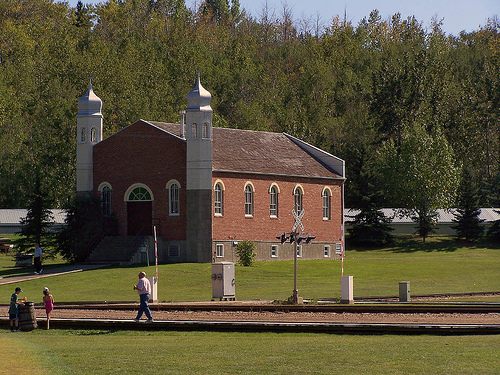
We strolled with visitors enjoying the park’s landscape and scenery. They were observing and assessing the park’s repertoire, marvelling at its historical layout and content. At 2:00 pm, we joined other visitor congregants and prayed Dhuhr (the midday prayer) inside the actual original building of Al-Rashid mosque, constructed in 1938. (“Through community advocacy and fundraising led by the Canadian Council of Muslim Women, the original building of the mosque was moved to the park in 1992 to save the historic building of the mosque from demolition.”)
Fort Edmonton Park is Canada’s largest living history Museum. It occupies 158 acres of land in the city’s river valley. The park tells the Edmonton region’s evolution from the fur trade era to the 1920s. The park has been divided and categorized into sections called STREETS. Each era shows how life was in the Edmonton region at that time, and how residents went about their routine activities. The park walks visitors through an era before the arrival of Europeans in Alberta, where only the indigenous peoples inhabited the land; then proceeds to 1846 when fur trade dominated by Hudson’s Bay Company was lucrative in the region; then moves on to 1885 when more Europeans arrived and an era of permanent settlement began; then inches to 1905 when Alberta became a province; then concludes with 1920 at a time technological advancements and modern urbanization were getting momentum.
The Indigenous peoples had inhabited the Edmonton region before the European set foot in the area. More specifically, they thronged around the North Saskatchewan River due to its abundant water and fishery species. Also, the area possessed forests replete with wildlife and fruits. In addition to its ever-flowing water, the river gave them access to transportation and trade routes.
Indigenous tribes that densely lived in the Edmonton region included Cree, Dene, Blackfoot, Nakota Sioux, and Métis. They had their ways of getting food, housing, clothing, and medicine. To get adequate protein, they hunted bison, elk, and deer. They also gathered fruits to supplement their food supplies. As well, they were deft at building weather-suited homes for themselves. Among their homes were Tipis, a cone-shaped house made from long wooden poles covered with dried animals’ skin; wigwams, a dome-shaped dwelling made from wooden frames covered with bark and animals’ hides; a pit house, a dwelling designed for cold winters and built into the ground with an earth roof.
When it comes to clothing, before Europeans arrived in the area, the Indigenous peoples had worn clothes made by them. They used to carve clothing out of animal skins—such as caribou, moose, bison, and deer. They cleverly cleaned the skins, softened them, and sewed them into dresses and footwear of different sorts. And they made clothes and footwear suitable for different seasons. Their clothes were reflective of their identities and cultures.
1846 Street: This section of the park showcases the Fur Trading Era. During the 1846, the Edmonton region was experiencing a robust trade transpiring between the Indigenous peoples and the Hudson’s Bay Company. In 1830, the company built Fort Edmonton at a place close to where today’s Alberta’s legislature building stands. The Fort became a bustling, booming business centre, where the fur trade enabled the Indigenous peoples and a smaller number of Europeans to energetically interact with one another and exchange business transactions, mainly based on animal hides, fur, and European-made goods. Historical documents report that about 110 people lived in and around the fort. A high-ranking Irish official from the Hudson’s Bay Company headed up the Fort; his name was John Rowand. He smartly struck a lucrative fur trade deal with different tribes of the Indigenous people. Europeans living in the area were not many. Reports say that about 30 to 50 European men and their families lived inside the fort’s compound. They worked for the Company.
1885 Street: This section of the park represents a permanent settlement transforming into a town. Initiating worship places, education centres, police stations, and hotels were forming at that time. This was an era with relatively rapid communication, manifested in telegraph, printing press media, and horse-drawn carriages. Here, visitors find Trading Post, Rowand House, Living Quarters, Jasper House Hotel, Original McDougall Methodist Church, North-West Mounted Police Outpost, and other olden amenities.
1905 Street: This section displays Edmonton’s situation during that era. It was a turning point for the Edmonton region’s residents and other places in Alberta because, in 1905, it became a province and Edmonton was chosen to be its Capital City. Also, in that same year, Edmonton gained access to a steam-powered railway which transported both people and freight to other towns of the province. The railway expedited residents’ travel and improved their connectivity, despite its sluggishness. On the political side, Alberta’s first provincial election took place in November 1905. The Liberal Party won the election, and its leader Alexander Rutherford became the province’s first premier.
1920 Street: This section of the park showcases Edmonton’s history and lifestyle during the 1920s. It was a post-World War 1 era, so the city was undergoing a recovery process and slow growth. Taking advantage of reliable trains that eased travel endeavours and transportation of goods, the city served as a distribution centre for northern and central Alberta towns. Also, many residents were able to use telephones, listen to radios, and watch silent films.
The flapper culture was getting momentum, too. “Flapper culture was a youth subculture of young, liberated women in the 1920s who rejected traditional Victorian values and societal expectations.” Women were repelling the Victorian lifestyle, where women dressed modestly, stayed at home, obeyed their husbands, and dedicated their time to rearing children. Instead, Canadian women and other Western women waged social movements and defied past traditional norms and values. They began wearing tight short dresses, shortening their hair, using heavy lipsticks, and defying their husbands’ guidelines.
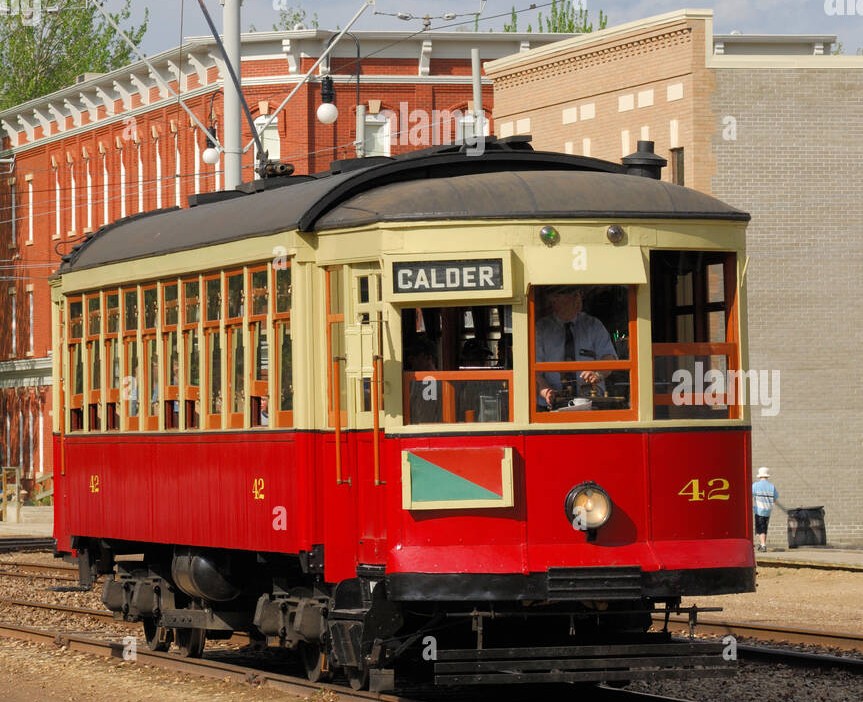
By laying out its historical settings into sections and time-based STREETS, Fort Edmonton Park presents a rich history to its visitors. It is a history of generations with their ups and downs. Visiting the park was an educational and mesmerizing experience for us indeed. We rode an early, electric car and enjoyed the ride. We had previously visited the park, but this year’s visit was more captivating. About 250,000 visitors come to the park’s grounds each year, according to the park’s online information.