
Before Edmonton became a city, it had been a buzzing hub for indigenous peoples for thousands of years. They, as archaeological records indicate, relocated from Asia and arrived in Canada 15,000 years ago. But nobody can exactly pinpoint when they came over or what motivated them to relocate. Back then, the name Edmonton did not exist, and it was not a multicultural city, holding together hundreds of communities from all over the world. The area was inhabited by only the indigenous peoples who called it “amiskwacîwâskahikan”, a Cree name, translatable as “Beaver Hills House”.
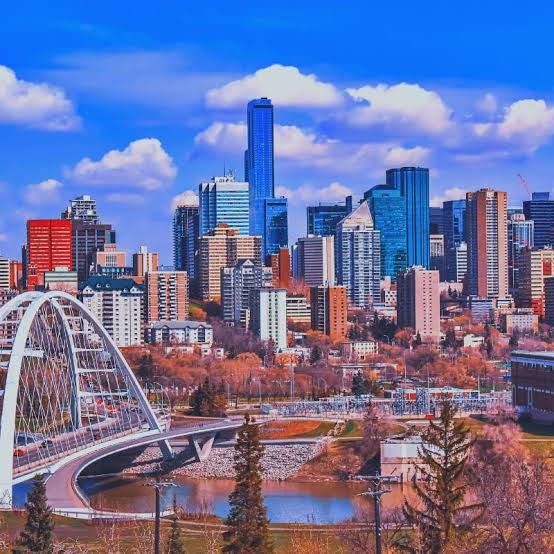
Edmonton’s location is very important. It’s located in central Alberta, along the North Saskatchewan River, which is the 13th longest river in Canada, stretching 1,287 km. The land on which the city stands had been an important gathering place for the indigenous peoples before Europeans arrived. “The city is located strictly within the boundaries of Treaty 6 territory, which was signed in 1876.” This was an agreement reached by representatives of the British Crown and local chiefs of the indigenous peoples. The treaty was called Treaty 6 because it represented various Indigenous Nations and their massive lands.
The treaty was signed at Fort Carlton (in Saskatchewan) on 23 August 1876. Its goal was to create an amicable relationship between the indigenous communities and representatives of the British crown who were bent on developing the land. The indigenous peoples signed the treaty in exchange for guaranteed peace, ongoing payments, healthcare, education, and reserved lands. Indigenous tribes who predominantly inhabited the area included Cree, Blackfoot, Dene, Nakota Sioux, and Anishinaabe.
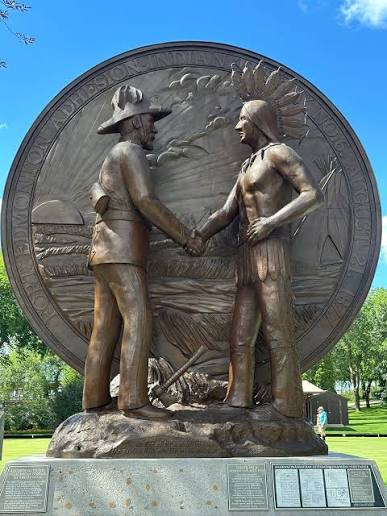
Edmonton served as an economic and cultural hub for the indigenous peoples. They took advantage of the land’s resources in terms of housing, fishing, hunting, foraging, and trading. They were able to cope with harsh winters by using their own techniques and skills. They built houses of snow for themselves, designing them according to their household members. They called such dwellings “Igloos”. The Igloos gave them warmth and security from cold, predators, and snakes.
They also knew how to get their food. With the river flowing in their midst, they had plenty of freshwater and fish. They fished for a variety of fish, including walleye, auger, burbot, and goldeye. These are fish species found in freshwater rivers. As well, hunting enabled them to get food. They hunted bison, deer, elk, moose, and caribou. To supplement their provisions, they used to cultivate native fruits and forage for them, too. They used to collect Saskatoon Berries, Chokecherries, High Bush Cranberries, Buffaloberry, Wild Strawberries, Pin Cherries, and Wild Raspberries.
In terms of medicine, they relied on medicinal plants to treat diseases. Plants used for medication included Sage (for colds, respiratory problems, and skin irritation); Sweetgrass (body cleansing and wellness); Cedar (immune-boosting and anti-inflammatory properties); Tobacco (to heal spiritual ailments, as they believed).
Regarding trade and business transactions, they—through their inter-tribal networks—exchanged goods, foodstuffs, medicines, tools, and hides (animal skins). They used both river and trail routes, and they had designated Transportation and Trade Hubs.
Then Europeans arrived in the area and started developing Edmonton into a modern settlement. It is reported that the first European to set foot on the city’s soil was Anthony Henday, an explorer and fur trader. He arrived in 1754. With business endeavours boiling in his head, he forged trading relationships with the indigenous peoples (The Anthony Henday highway that encircles the city has been named after him).
Later on, trading companies flowed suit and upscalled trade transactions. In 1795, the Hudson Bay Company built a fur trading post along the North Saskatchewan River and called it “Fort Edmonton”, naming it after a hamlet in England. that Edmonton in England was the place where the Deputy Governor of the company, Sir James Winter Lake and his clerk, John Peter Pruden, were born. They honoured their birthplace. The city of Edmonton has adopted its name from that hamlet in Britain, and eventually the settlement of the city emerged from that fur trading station. “Edmonton officially became a city on October 8, 1904”.