
Somali-Canadians and immigrants must enumerate their household members for the 2026 Canadian census to get recognition and resources. Canada conducts a nationwide mandatory census (survey) every five years to collect data about the country’s population to plan for housing, education, employment, and recreational resources. Canada’s first national census was taken in 1871 after four years of the country’s formation, and the last census was taken in May, 2021. Now, the 2026 census is upon us. The enumeration will continue until July 2026, although the initial target deadline was May 12.
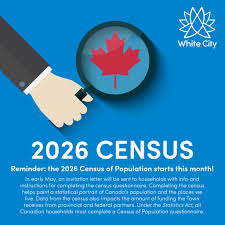
Census information is very important to the extent that the federal government rely on census data for planning and providing services. Visibility creates opportunities. The more people counted, the more services and resources provided. Policy makers base their recommendations regarding initiating needed services and resources on data obtained from Canadian censuses administered by Statistics Canada, which is a federally regulated agency responsible for gathering and publishing vital information about the country’s population.
There are two types of censuses, a short version and a long, detailed one. 75% of the population receives the short version, and 25% gets the long version. Statistics Canada’s short-form census (the 2A form) asks questions such as the number of persons in the household, their names, their ages, their marital status and relationship to one another. Also, questions asked by the (2A form) include languages spoken at home. But the form does not ask questions about one’s religion, ethnicity, education, employment, or income level. On the other hand, the long-form census (the 2A-L form) asks all the demographic questions from the short-form census in addition to questions regarding one’s ethnic group, education, employment, and economic status. It is a comprehensive survey.
By fully participating in the Canadian census, Somali-Canadians document their presence and growth in the country and can demand befitting resources that positively impact their wellbeing and integration. However, being mostly first-generation immigrants, many families do not understand the significance of the Canadian census, so they ignore it or do not correctly count their household members. They must do the census to the best of their efforts. Like any other residents, Somali-Canadians and immigrants are obliged to fill out the census forms, or else they can get fines of up to $500 dollars. “Under the Canadian Statistics Act, filling out the census is mandatory by law.”
A completely and accurately conducted census will reveal the community’s demographics, education, and socioeconomic standing across the country. Hence, such information can lead to initiating development projects carried out in towns and neighbourhoods where the community resides, with other Canadians and residents, of course. Some of these projects can be schools, hospitals, and recreational centres. Statistical data matters a lot.
Enumeration is an impactful form of advocacy. When Somalis—be they citizens or immigrants—count in themselves accurately, community leaders can uncover stored demographic data and advocate for the initiation of varied services aimed at enhancing the community’s education, cultural heritage, and standard of living. For instance, the number of vulnerable groups of the community and where they congregate in the country can be easily tracked if their census data is available, enabling community leaders to advocate for them and alert policymakers’ attention to such areas and residents.
Also, census data brings about political influence. Fast-growing towns and constituencies get rapid political representation. And the Somali-Canadian community is a fast-growing community. The 2021 Canadian census reported that 65,555 Somalis had been living in the country, but the number could be more than that, as many people argue about the accuracy of the reported number. Undercounting is always an issue for immigrant communities, as they do not report their actual household numbers. Therefore, the community might have been undercounted. If the community fully takes part in the country’s periodic censuses, it will receive vibrant political influence and recognition.
Being found in the country’s active and archival records reinforces belonging and citizenship. Like any other community, Somalis are entitled to become Canadian citizens after fulfilling the required conditions. But that citizenship needs strengthening. Participating in the Canadian censuses strengthens the community’s citizenship obligations and gives them a sense of belonging after finding their statistical information all over the place.
Let the community roll up its sleeves and fully and accurately partake in this year’s Canadian census. It is imperative to fill out the forms as they reflect the community’s presence in the country. Overlooking the census is to overlook the community’s significance and contribution in Canada. The 2026 census will continue through July, and both paper questionnaires and an online Form can be obtained from Statistics Canada. Click on this link to get more information about the forms.