
Writing technology is at its peak today, but it has journeyed a long way. Writing evolved from Painting caves to carving on stones to writing on papyrus sheets to writing on clay tablets to writing on parchment to writing on paper, and eventually using keyboards and voice typing/recognizing machines.
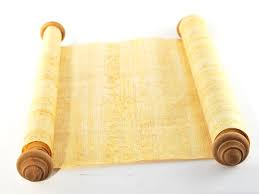
Ancient peoples used tedious and slow writing tools. To communicate messages to one another, they wrote on papyrus sheets, on clay tablets, and on animal skins. And each of those writing materials needed perfection and perseverance. Papyrus is a plant that still grows alongside the banks of the Nile, despite its scarcity. For the ancient Egyptians, the papyrus plant was an invaluable plant that gave them power and prosperity. They used the plant as it was a suitable material for writing after it had been processed and smoothed out. However, its processing would take effort and artfulness. They harvested the papyrus stalks and readied them for further processing by cutting the white inner pitch of the stalks into tiny, vertical strips. They would then soak them in water to lessen the strips’ flexibility. The soaking process took several days. After that, the strips were arranged horizontally and vertically on top of each other, sitting on a solid surface. Then, they were hammered on the surface to extract moisture and make them suitable for writing. Lastly, by joining together the horizontal and vertical stripes, a long scroll was produced, which enabled scribes to write on. Ancient scribes used reed pens kept in a wooden or ivory palette and black ink made from bunt oil or wood for writing.
Clay tablets were another writing material. Clay tables were flat surfaces made from river mud dried in the sun. They resembled rectangles with round corners. Designing and processing clay tablets was not an easy task, however. They had to be cleaned, sundried, or fired in a traditional oven for smoothness and durability. Mesopotamia (Present Iraq) used clay tablets for writing endeavours. “Tablets were used for accounting, business contracts, legal documents, and literature like the Epic of Gilgamesh.” The clay tablets were good for restoring information for a long time. Hence, they were often used for archival purposes.
Also, for the ancient peoples, parchment became another writing material and replaced the Papyrus scrolls. Like the Papyrus plant and clay tablets, processing and preparing parchment demanded hard work. People dehaired cows, calves, and sheep skins and put them in lime; then they scraped them and flattened them on a surface to dry and eventually turn them into a smooth, flat surface that, unlike the papyrus, could be folded into pages.
Likewise, ancient peoples used bamboo slips and wooden pieces as materials for writing. They used them because they were readily accessible to them. Like the aforementioned ancient materials, bamboo slips could not be easily moulded into suitable pieces for writing. Their smoothing process would, of course, take time. Not everyone could craft them; only some adept craftsmen made scrolls out of raw bamboo and wood. Unlike the papyrus sheets and parchments, though, bamboo and wooden scrolls were heavy to carry around or transport from one location to another.
As time went by, humans’ knowledge advanced and led them to new ways of producing writing materials. They invented paper. Before the advent of paper, they, for generations, had relied on the above-stated cumbersome materials to communicate with each other through writing. Cei Lun, a Chinese court official for the Han Dynasty (206 BCE–220 CE), is credited with having invented paper. His inventive idea eased the tedious processes that humans had been going through in relation to making those ancient writing materials. Later on, the paper-making idea travelled to the Islamic world, where it flourished and travelled from there to Europe in the eleventh century.
The invention of the Gutenberg printing press scaled up the production and use of paper. In the fifteenth century, Johannes Gutenberg (a German goldsmith) invented movable type. Using metal letters, the movable machine applied pressure to transfer ink onto paper. Soon after, unlike handwritten documents, which would take a long time to produce, the movable type would generate twenty-five pages per hour. Indeed, the movable type became a breakthrough writing tool that helped alleviate the tedious processes undertaken to produce handwritten documents. It was a great success. All subsequent typewriters were modelled on the movable type invented by Johannes Gutenberg. And they caused the demise of handwritten documents.
The use of typewriters had continued until computers emerged and displaced them. Although computers demand the know-how, they have been a wonderful tool to use for writing. They are fast, efficient, and clean. People neither need to hurt their fingers by dealing with papers nor do they need to soil their hands in ink. All they need is to put their fingers on the keyboard and type whatever document they want to produce. The only time people will need to deal with paper is when they desire to print out written documents stored in computers. Hence, the use of paper is shrinking. Voice typing is another unprecedented writing technology today. Amazingly, it transcribes words as people speak and eventually turns the speech into written documents, which could be retrieved and printed on paper in the end.
As humans continue to exist, their writing technologies continue to develop, irrespective of their forms and scopes. And what writing technologies will come after the present ones is unknown thus far.