Early Canadian Muslims faced trials and tribulations that led them to compromise on their cultural and religious identity. Muslims’ immigration to Canada dates back to the 1800s. They arrived in the country in search of a better life and peace. They came from Scotland, the Middle East, and British India (encompassing India and Pakistan before the split). They identified themselves as “Mohammedans” as the name Muslims was not commonly used at the time.
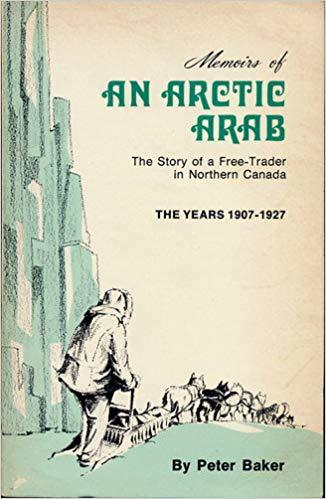
Most of them were young male labourers with no formal education. And they spoke neither English nor French. They intended to work hard, amass enough money, and return home. However, they never went back to their home countries. Bedouin Ferran (known as Peter Baker) is a case in point. In 1907, he left his village in Lebanon for Canada. In his book (Memories of an Arctic Arab), he reminisces about how he left Lebanon, arrived in Canada, and moved from one ordeal to another.
Due to harsh circumstances in which they lived, many of those early Muslims in Canada drifted away from Islam. They lost contact with the religion’s core beliefs, including offering regular prayers and fasting during Ramadan. Moreover, many of them changed their names to blend into society. Bedouin Ferran was among those who changed their Muslim names. As he mentions in his book, Canadians could not pronounce his names or easily remember them. He worked at a Holy Cross College in Canada as a labourer. In 1909, his boss (a Catholic Priest at the college) asked him to explain the meaning of his name. “What does Bedouin Ferran mean?” asked the priest. “Ferran means baker,” said Bedouin. “Then, you are Peter Baker,” concluded the priest. From that day on, Bedouin Ferran retained the name “Peter Baker”. He later moved up the ladder and became the first Muslim politician elected to a public office in Canada.
Still clinging to their religion, some of those early Canadian Muslims could not stomach abandoning the religion’s principles altogether. Therefore, they would come together, advise each other, and practice whatever they could. The environment was not conducive, and their knowledge of Islam was minimal. Neither mosques nor Islamic centres existed for them. However, they would come together and hold Friday sermons on Sunday, the only day to bring them together. They lacked adequate knowledge, telling them that Friday sermons could not be held on Sundays.
Although some challenges exist for Canadian Muslims today, many of the difficulties experienced by the early Canadian Muslims do not exist today. Today, we can find mosques and Islamic centres in every corner of Canada. We call ourselves Muslims, not Mohammedans as Peter Baker and his cohorts did. Also, we can find rooms designated for prayers in schools, universities, libraries, recreational centres, and hospitals. We can also pray in the open as long as we do not infringeonother people’s privacy and activities. We can also retain our Muslim names (Mohamed, Ahmed, Ali, Farah, Fatima, Khadija, Asha, and the like) without fearing any misunderstandings. Are we not more fortunate than Peter Baker and his Muslim cohorts?